How added sugar and unbalanced meals may be affecting your energy after 50
You start the day with good intentions. Maybe breakfast is coffee and a piece of toast, or a yogurt that looks healthy. Lunch is light because you are trying to be “good.” You are taking care of everyone and everything on your list, just as you always have. Then 3 p.m. arrives. Your energy drops. You feel hungry, distracted, or suddenly desperate for something sweet. By dinner, you are picking at whatever is nearby and wondering why your willpower disappeared.
This may not be a willpower problem at all. It may be a sign that your meals are not giving your body the balance it needs to support steady energy throughout the day. And that matters because you do not simply want to get through the afternoon.
You want energy to take the walk, lift the weights, make dinner, enjoy your family, focus on your work, and still feel like yourself at the end of the day. You want to feel strong now and protect your health for the years ahead. The answer is not another restrictive diet. It is learning how to fuel your body more intentionally.
How Much Added Sugar Is Too Much?
The American Heart Association recommends limiting added sugar to no more than 6 percent of your daily calories. For most women, that is about 25 grams, 6 teaspoons, or 100 calories per day. That number can add up much faster than you might expect.
A flavored yogurt, bottled coffee drink, granola bar, sweetened oatmeal, or generous spoonful of salad dressing can contain several grams of added sugar. Combine a few of those foods in one day and you may exceed the recommendation without eating a single piece of candy.
This does not mean sugar is toxic or that you can never enjoy dessert. It means it is worth knowing where added sugar appears in your day and deciding which sources are actually worth it to you.
At this stage of life, heart health can feel more personal than it once did. Maybe you have watched a parent, sibling, spouse, or friend face a health scare. Maybe your own lab results have made you pay closer attention. You do not need to live in fear of food, but you do deserve clear information that helps you make choices with confidence. The goal is not to scare you with a number. It is to show you one more area of your health that you can influence.
Added Sugar Is Not the Same as All Sugar
This distinction matters. Added sugars are put into foods or drinks during processing or preparation. You may see them on an ingredient list as cane sugar, brown sugar, corn syrup, honey, maple syrup, agave, fruit juice concentrate, or another form of sweetener.
Naturally occurring sugars are found in foods such as whole fruit and plain dairy. These foods also provide nutrients your body needs. Whole fruit contains fiber, vitamins, minerals, and water. Plain yogurt or milk provides protein and other nutrients.
The goal is not to fear fruit or remove every carbohydrate from your plate. The goal is to reduce added sugars that offer little nutrition and build meals around whole, nutrient-dense foods.
Why You May Be Riding an Energy Roller Coaster
Carbohydrates affect blood sugar, but what you eat with them matters. The Centers for Disease Control and Prevention explains that eating carbohydrates with foods containing protein, fat, or fiber can slow how quickly blood sugar rises. That is one reason an apple affects your body differently than apple juice, or why toast with eggs and berries may keep you satisfied longer than toast by itself.
When meals are too small, low in protein, or built mostly from refined carbohydrates, you may feel energized briefly and then hungry or tired soon afterward. This can lead to the familiar cycle of reaching for another coffee, snack, or sweet treat to get through the afternoon.
Rather than trying to resist those cravings with more willpower, look at what came before them. Did you eat enough at breakfast? Did lunch include protein and fiber? Have you had water? Did you go too long without eating?
Your afternoon craving may be useful information, not a personal failure. Instead of blaming yourself, you can get curious. Instead of promising to be “better” tomorrow, you can make your next meal more supportive today.
A Simple Formula for More Balanced Meals
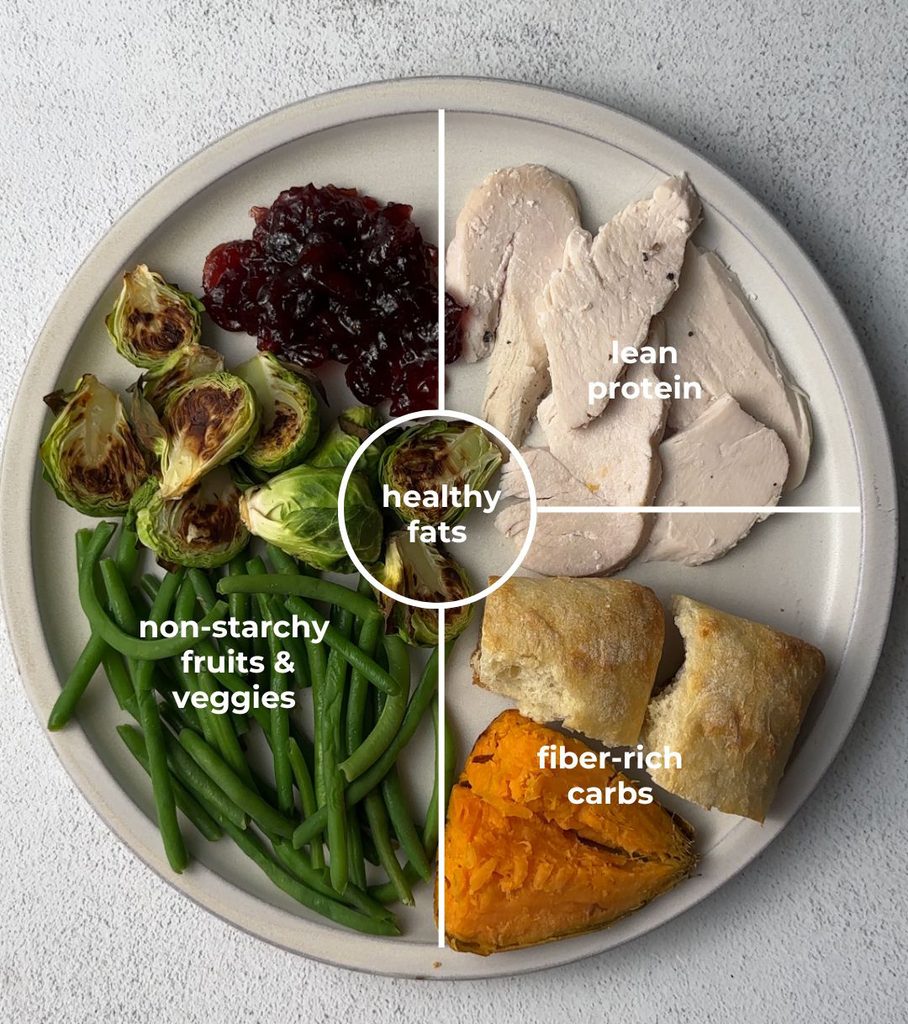
You do not need to count every bite or eat perfectly. Begin by including these four elements in your meals.
- Protein
Choose eggs, chicken, turkey, fish, lean meat, tofu, beans, lentils, cottage cheese, Greek-style yogurt, or a protein shake that works for you. Protein supports muscle, helps make meals more satisfying, and becomes especially important as we age.
- Fiber-Rich Carbohydrates
Try berries, apples, vegetables, beans, oats, quinoa, brown rice, sweet potatoes, or other minimally processed carbohydrates. These foods provide energy along with fiber and important nutrients. You do not need to eliminate carbohydrates. Choosing better sources and pairing them well is a more useful strategy.
- Healthy Fats
Add avocado, nuts, seeds, olives, olive oil, or another source of healthy fat. Fat adds flavor and helps make a meal feel complete and satisfying.
- Color and Volume
Fill out your plate with vegetables or fruit. This is a simple way to add fiber, nutrients, texture, and volume without making your plan complicated.
A balanced breakfast might be eggs with vegetables, berries, and avocado. Lunch could be grilled chicken over greens with quinoa, vegetables, and an olive oil dressing. A snack could pair an apple with peanut butter or plain yogurt with berries and nuts. These are not rigid rules. They are starting points you can adjust to fit your preferences and your life.
Start by Reading One Line on the Label
You do not have to overhaul your kitchen today. The next time you pick up a packaged food, look at the Nutrition Facts label and find “Includes X g Added Sugars.” Be sure to check the serving size too.
Ask yourself: Is there another version with less added sugar? Could I choose the plain version and add fruit or cinnamon? Do I truly enjoy this food enough for the added sugar to be worth it?
Sometimes the answer will be yes, and that is okay. The point is to make an intentional choice instead of consuming added sugar without realizing it.
This Is About More Than Eating Less Sugar
Reducing added sugar can support a more heart-healthy eating pattern. But the bigger lesson is learning how to fuel yourself well.
When you build meals with protein, fiber-rich carbohydrates, healthy fats, and colorful whole foods, you give your body a stronger foundation for steady energy. You may also notice that you feel more satisfied and less dependent on quick snacks to make it through the day.
You do not need another list of foods you are not allowed to eat. You have probably followed enough rules already. You need a simple plan you can practice in real life. One that helps you feel steady, strong, and capable instead of constantly starting over.
Want to Practice This With Me?
My 5-Day Kickstart begins October 26. Together, we will reduce added sugar, build more balanced meals, and practice simple habits that support steadier energy.
No perfection. No giving up fruit or cutting every carbohydrate. Just five guided days to learn what helps you feel stronger, more energized, and more confident in your choices.
Be well, Erin
Sources
American Heart Association: Added Sugars
https://www.heart.org/en/healthy-living/healthy-eating/eat-smart/sugar/added-sugars
American Heart Association: How Much Sugar Is Too Much?
https://www.heart.org/en/healthy-living/healthy-eating/eat-smart/sugar/how-much-sugar-is-too-much
Centers for Disease Control and Prevention: Diabetes Meal Planning
https://www.cdc.gov/diabetes/healthy-eating/diabetes-meal-planning.html
Note: If you have diabetes or take medication that affects your blood sugar, talk with your healthcare provider before making major changes to your eating plan.